

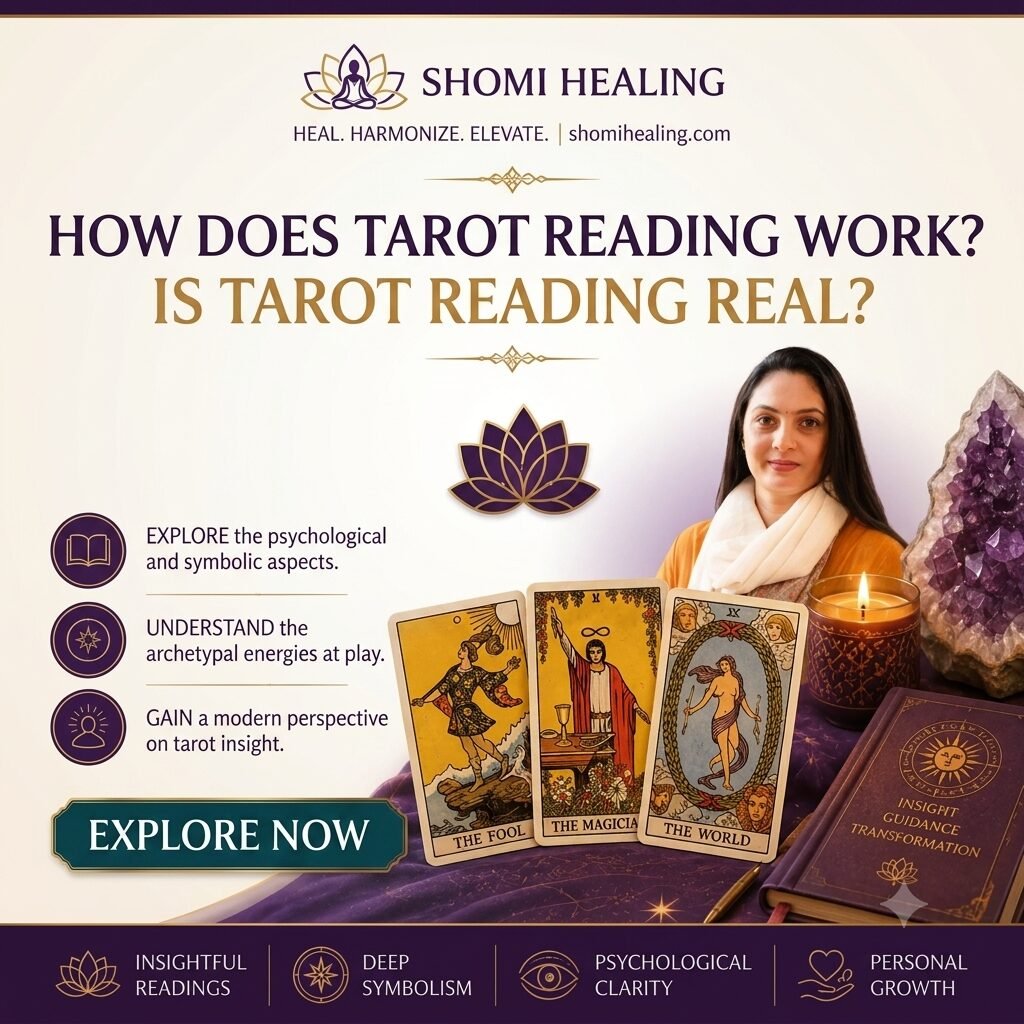
Many people discover tarot while searching for clarity, reassurance, or a different perspective during uncertain periods. However, newcomers often ask one important question first: how does tarot reading work?
Tarot uses symbolic cards, intuitive interpretation, and focused questions to explore thoughts, emotions, patterns, and possible choices. Therefore, a reading can feel personal without claiming to predict every future event with certainty.
For many seekers, tarot works best as a reflective practice rather than a fixed prediction system. Moreover, the cards can encourage questions that reveal feelings you may have overlooked.
If you are considering your first session, understanding the process can make the experience calmer and more meaningful. Consequently, you can approach tarot with curiosity instead of unrealistic expectations.
How Does Tarot Reading Work?
First, a tarot session usually begins with a question, concern, or intention. You may ask about relationships, career decisions, personal growth, or an upcoming transition.
Next, the reader selects or guides you through cards using a particular spread. Each card contains symbols, images, numbers, characters, and traditional associations.
Then, the reader connects those symbols with your question and the surrounding cards. Therefore, interpretation depends on the complete spread rather than one card alone.
Also, experienced readers consider the position of each card within the chosen spread. For example, one position may represent your current situation, while another represents a possible challenge.
Meanwhile, your responses can provide additional context during a consultation. As a result, the session becomes a conversation around your circumstances rather than a simple card-based answer.
Finally, the reader summarizes the main themes and practical reflections. This approach can help you identify choices, emotional patterns, and areas requiring attention.
Is Tarot Reading Real?
The answer depends on what you mean by real. Tarot is real as a traditional symbolic practice, but claims about guaranteed supernatural prediction require personal interpretation.
For example, tarot cards physically exist, and their meanings come from established traditions and evolving reader practices. However, there is no reliable scientific evidence proving that cards can consistently predict specific future events.
Still, people may experience meaningful insights during readings. This can happen because symbolic prompts encourage reflection, emotional awareness, and consideration of alternative viewpoints.
Moreover, a skilled reader may notice themes in your language, concerns, and reactions. Consequently, the session can help you articulate thoughts that previously felt confusing.
Therefore, tarot can be useful without requiring you to accept every mystical explanation. Instead, consider the reading as a tool for reflection, perspective, and personal exploration.
What Can Tarot Help You Understand?
Tarot can support reflection around several common life questions. For instance, people often explore relationships, career uncertainty, financial pressure, confidence, communication, and personal direction.
However, the value usually comes from the questions you bring into the session. A vague question can produce broad themes, while a focused question can encourage clearer reflection.
For example, asking “What should I learn from this career situation?” may encourage deeper thinking. In contrast, asking “Will I definitely get this job?” creates an expectation of certainty.
Similarly, relationship readings can explore communication patterns, emotional needs, boundaries, and personal expectations. Therefore, tarot may help you understand your role within a situation.
Additionally, readings can highlight possibilities rather than predetermined outcomes. This perspective can make the process more empowering because your decisions still matter.
What Happens During a Tarot Consultation?
First, you discuss the reason for your reading and choose an area of focus. Next, the reader may ask a few questions to understand your situation.
Then, cards are drawn and interpreted according to their positions and symbolism. Meanwhile, you can share reactions or additional details when something feels relevant.
Moreover, you should feel comfortable asking the reader to explain unfamiliar cards. A professional consultation should encourage understanding rather than fear or dependence.
Afterward, the reader may summarize recurring themes and practical considerations. Therefore, you leave with reflections that you can consider independently.
For online consultations, the same basic process can happen through a video call or digital session. Consequently, location does not necessarily prevent you from accessing a guided reading.
How to Choose a Tarot Reader
First, look for clear information about the reader’s approach, services, and consultation process. Also, check whether their communication feels respectful and transparent.
Next, review testimonials carefully, while remembering that personal experiences can differ. Moreover, avoid anyone promising guaranteed wealth, perfect relationships, or absolute predictions.
A trustworthy reader should respect your ability to make decisions. Therefore, the session should provide perspective rather than create fear or pressure.
Additionally, ask whether the consultation focuses on your specific concern. A tailored session can feel more useful than a generic reading.
Finally, choose someone whose style makes you comfortable asking questions. That comfort can make the reflective process more open and productive.
Questions to Ask Before Your First Reading
You can prepare a few questions before your appointment. First, decide what situation you want to understand more clearly.
Next, write down the main facts without trying to predict the answer yourself. This preparation can prevent the session from becoming unnecessarily complicated.
Also, consider asking about the reader’s method and expected consultation format. Furthermore, clarify whether you can ask follow-up questions during the session.
For example, you might ask, “What should I focus on during this transition?” Another useful question is, “What pattern am I currently overlooking?”
Therefore, thoughtful questions can make the reading more focused. Ultimately, the strongest benefit may come from the perspective you gain and the decisions you make afterward.
Tarot and Personal Reflection
Additionally, tarot can help you slow down when emotions are moving quickly. A structured conversation creates space for careful reflection.
For example, a relationship concern may involve fear, expectations, communication, and unresolved experiences. Therefore, exploring these themes can clarify what you actually need.
Similarly, a career concern may involve confidence rather than the job itself. A reading can encourage you to separate facts from assumptions.
Moreover, symbolic interpretation can create useful prompts for journaling and self-reflection. You may write down the themes that feel especially relevant.
Then, revisit those notes after a few days. This distance can help you decide which insights remain meaningful and which were temporary emotions.
A Balanced Approach to Tarot
A balanced tarot experience combines intuition with practical thinking. Therefore, use the cards to generate questions rather than surrendering responsibility for decisions.
Also, remember that different readers can interpret the same card differently. Context, experience, symbolism, and the question can influence the final interpretation.
Consequently, you should not feel pressured to accept every statement as fact. Ask questions when an interpretation feels unclear or confusing.
Finally, judge the value of a reading by the perspective it creates. If you feel clearer and more independent afterward, the process has served a useful purpose.
Instead, approach tarot with an open mind and realistic expectations. Moreover, use the session to reflect, question assumptions, and understand your situation from another angle.
If you are searching for a tarot card reading consultation, choose a practitioner who values clarity, privacy, and personal choice. Ultimately, a meaningful reading should leave you more aware, not more dependent.
Conclusion
Tarot reading can be understood as a symbolic and intuitive practice for exploring questions, emotions, and possibilities. However, it should not replace professional medical, legal, or financial advice.