

Introduction
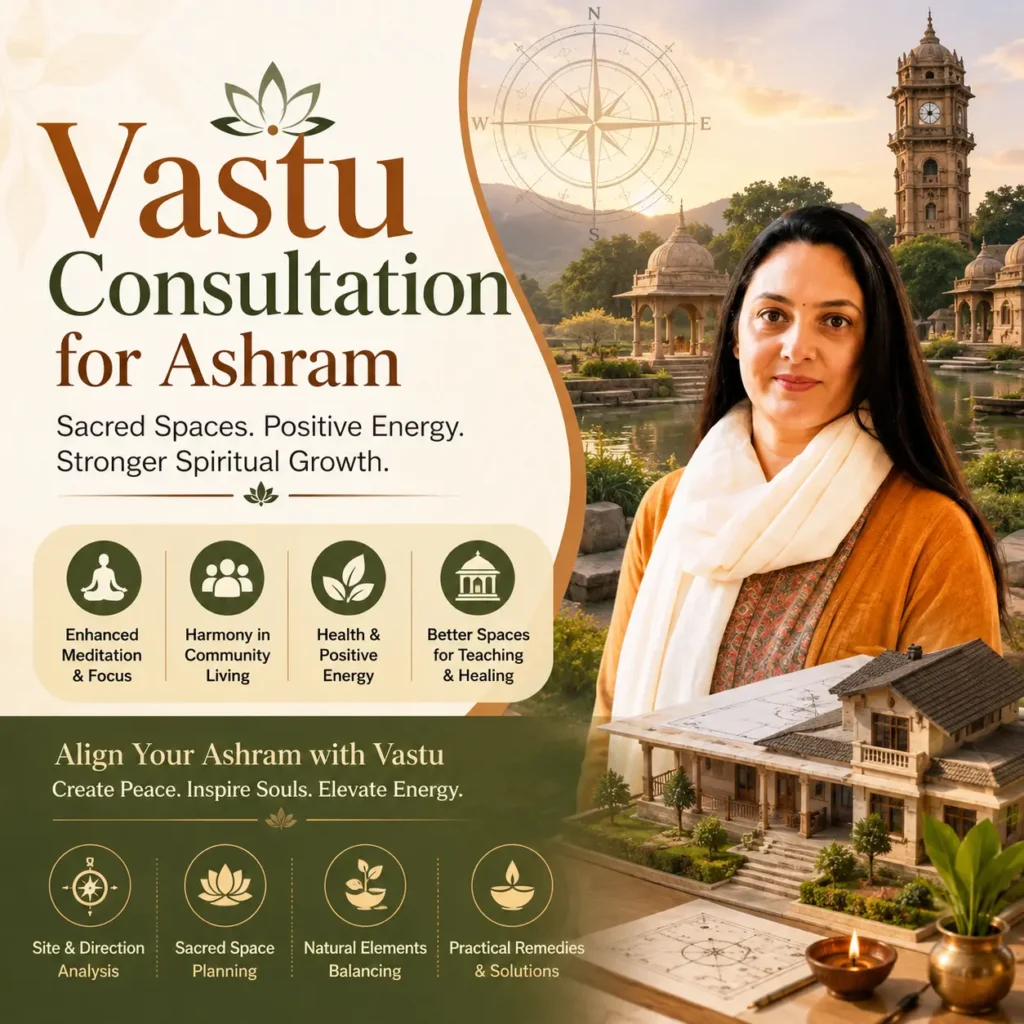
Vastu consultation for Ashram blends sacred architecture and energy science. Ashrams require calm, clarity, and steady spiritual energy. A focused Vastu plan improves meditation, teaching, and communal living.
This guide explains assessment, common issues, and remedies.
Why Vastu matters for Ashrams
Ashrams host healing, meditation, and group practices. Correct spatial alignment supports collective consciousness and practice quality. Vastu balances pranic flow inside buildings and across the site.
Therefore, an ashram aligned to Vastu produces calm and resilience.
Primary assessment steps
- Site orientation check to identify true north and cardinal directions.
- Plot shape and slope analysis for water and energy movement.
- Building grid and room placement review for functional needs.
- Entrance analysis for energy entry and welcome flow.
- Sanctum sanctorum placement and altar orientation check.
- Circulation and congregation spaces review to ensure smooth flow.
- Natural light, ventilation, and vegetation mapping across the site.
Common Vastu issues in Ashrams
- Main entrance misalignment that blocks positive energy.
- Prayer hall in a corner or wrong direction causing distracted practice.
- Kitchen or waste in the northeast creating energy disturbance.
- Dormitories without clear head placement reducing sleep quality.
- Water features sited incorrectly causing stagnation.
Simple remedies and non-structural solutions
- Shift altar position to a more auspicious sector when possible.
- Use subtle color adjustments to balance directional energy.
- Rearrange furniture to open circulation paths and reduce blockages.
- Introduce indoor plants in under-energized zones for life force.
- Place water bowls or small fountains in correct sectors for flow.
- Use mirrors carefully to redirect light and restore balance.
- Adopt lighting schemes that support meditation and evening routines.
Ashram-specific design advice
Prayer halls should face northeast, east, or north when possible.
Dormitories must support head placement toward the east or south.
Kitchens work best in the southeast sector of the complex.
Library and study rooms should be in the north or northeast.
Outdoor prayer and yoga spaces need level ground and unobstructed sky.
Case example
A small ashram noticed low attendance and restless energy.
Assessment found the entrance facing a busy road and kitchen in northeast.
Remedies moved the main door canopy and relocated kitchen operations.
Plants and a northeast water bowl were added to restore flow.
Within weeks, meditation depth and guest comfort improved measurably.
Benefits of Vastu for Ashrams
- Enhanced meditation focus and group harmony.
- Improved health and restful sleep for residents.
- Clearer teaching spaces and organized program flow.
- Better resource management and calmer communal life.
How a consultation works
- Initial remote questionnaire and photo submission.
- Onsite survey with compass, grid, and site mapping.
- Detailed report with prioritized remedies and diagrams.
- Follow-up session to review outcomes and adjust remedies.
Conclusion
A thoughtful Vastu consultation improves sacred space quality. Consequently, community life, study, and healing benefit directly.
Book an assessment to begin gentle, practical Vastu improvements.