

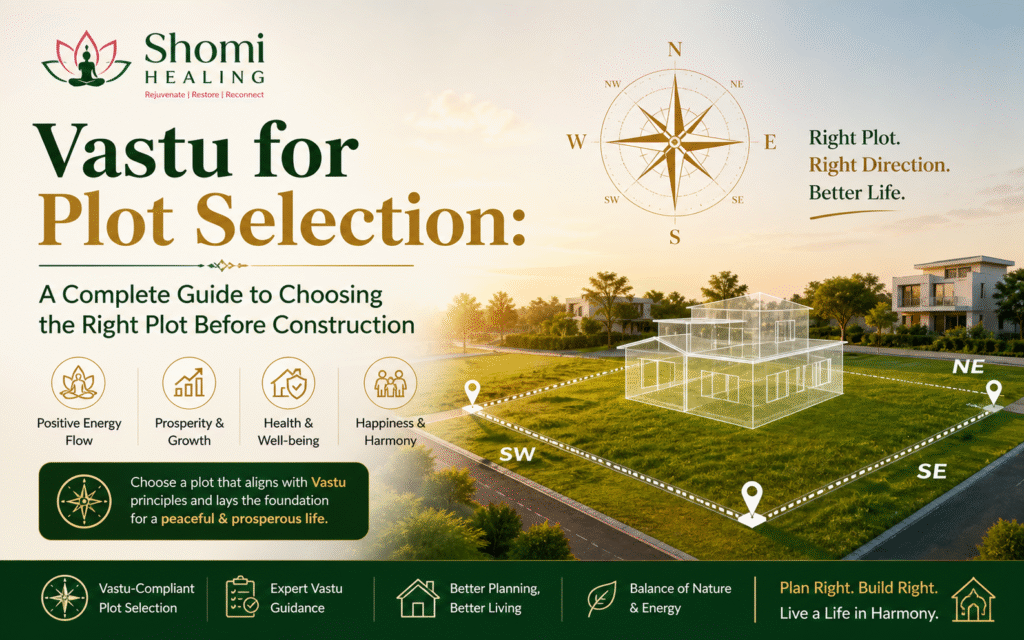
Planning a home does not start with the walls, the interior or the design. It starts earlier with the land you choose. For families buying a plot is a big decision, both emotionally and financially. It can be confusing with different opinions and a lot of pressure to decide quickly.
There is a lot of advice from relatives, brokers and online sources but not all of it is clear or practical. This is where understanding vastu for plot selection can be helpful. It is not a set of rules but a guiding framework to help you make a grounded and informed choice.
The goal is not to find the plot. The goal is to find a plot that’s clear and easy to work with in the long term.
Reach out to us for detail understanding
Why Plot Selection Matters in Vastu?
Before construction even begins the energy of the land plays a role in how the space will feel and function over time. A chosen plot supports stability, makes construction decisions easier and helps align the design with your lifestyle.
When vastu is considered early it reduces the need for corrections later. It also gives your architect flexibility to design without constraints.
The Shape and Structure of the Plot
The shape of the plot is one of the things to evaluate.
Square and rectangular plots are generally preferred because they are balanced and simple to plan. These shapes make it easier to divide spaces and maintain a steady flow across the home.
Irregular plots, such as those with cuts, extensions or unusual angles are not always bad. However they require planning. In cases it is important to understand how the design can compensate for the irregularities.
If the shape feels too complex to manage it is better to reconsider before making a purchase decision.
Understanding Plot Slope
Slope is often overlooked. It plays a practical and symbolic role.
Ideally the plot should slope gently from south to north or from west to east. This allows for natural water drainage. Prevents water stagnation, which can affect both construction quality and maintenance over time.
A plot that slopes in the direction is not automatically bad but it may require additional work during construction to correct the level differences.
The key is to observe the flow of the land before committing.
Road Access
The position of the road in relation to the plot is another factor.
Plots with road access from the north or east are commonly preferred, as they allow planning of entry points and open spaces. However plots with west roads can also work well when designed thoughtfully.
By focusing only on direction it is more useful to consider how entry, parking and movement will function practically in your daily life.
Direction and Orientation
Direction is one of the discussed topics in vastu.
Many people look for an east-facing plot assuming it is the option. While east-facing plots are popular because they receive morning sunlight they are not the good choice.
North-facing plots are also considered beneficial for financial growth and opportunities. West and south-facing plots can work as well when planned correctly.
The focus should not be limited to the facing of the plot. What matters more is how the internal layout aligns with light, ventilation and daily usage.
Environment
The environment around the plot has an influence on the overall experience of living there.
Observe what surrounds the land:
Are there spaces nearby?
Is there noise or congestion?
Are there natural elements like trees or water bodies?
A calm and balanced surrounding supports living conditions. On the other hand plots near heavy traffic zones, industrial areas or cluttered spaces may feel overwhelming over time.
Also check for any structures casting shadows on the plot as this can affect sunlight and ventilation.
Sunlight and Natural Elements
Access to light is essential for both physical comfort and overall well-being.
A good plot allows sunlight during the day especially in the morning hours. This reduces dependence on lighting and helps maintain a healthier indoor environment.
Wind direction and airflow should also be observed. Proper ventilation keeps the home comfortable. Reduces long-term maintenance issues like dampness.
Bhoomi Puja: Starting with Intention
Before construction begins many families perform Bhoomi Puja.
While often seen as a ritual its deeper significance lies in intention. It marks the beginning of building on that land with awareness and respect.
It is less about following a fixed process and more about creating a start. This step helps establish a sense of connection with the space before construction activity begins.
Balancing Vastu with Modern Architecture
Today’s homes need to balance aesthetics, functionality and comfort. Vastu should support this process, not restrict it.
A planned home integrates vastu principles with practical design. This means working with architects to ensure that both structure and energy flow are considered together.
By forcing rigid rules it is more effective to adapt vastu principles in a way that aligns with your lifestyle and the plot’s natural characteristics.
Practical Checklist Before Buying a Plot
Before finalizing your decision review these points:
- Plot shape (preferably regular)
- Slope direction and drainage
- Road position and access
- Surrounding environment
- Sunlight and ventilation
- Space for entrance placement
Taking time to evaluate these factors can prevent complications later.
FAQ
What is vastu for plot selection?
It is the process of evaluating a plot based on its shape, direction, slope and surroundings to ensure balance and usability.
Is an east-facing plot the best option?
It is commonly preferred. It is not the only good option. Other directions can work well with proper planning.
Can vastu be applied before construction?
Yes. In fact, applying vastu at the plot selection stage is the effective approach.
Where can I get vastu consultation for a plot in India?
You can consult Shomi Healing for guidance based on your plot and requirements.
Final Thought
Choosing a plot is not about finding something. It is about finding something
When you approach the decision with clarity, awareness and a balanced perspective you naturally make choices. Vastu in this context becomes a tool for understanding than a set of restrictions.
Take your time. Observe carefully. Ask the questions.
The right plot is not about location or price. It is about how it supports the life you plan to build on it.